
A $4.65 Billion Lab Just Gave Away a Coding Model. Read the Fine Print.
When the tool is free, the advantage moves to the person directing it. Recursive's own instructions say exactly how.
On 21 October, Recursive released Flint, a coding model that anyone can download for free under an Apache 2.0 licence and run on a laptop, according to TechCrunch. Recursive is an AI lab that came out of stealth in May with $650 million in funding at a $4.65 billion valuation, and it says its automated research system, the Eureka Machine, helped with nearly every step of building the model. Most coverage stopped at that claim. The more useful reading is in the instructions that ship with the model.
What the headline does and doesn't show
Start with what is established. The speed and benchmark figures are Recursive's own, and TechCrunch's report carries no independent verification of them. RuntimeWire notes that the company has not said how much of the work the Eureka Machine actually did, and CEO Richard Socher told Wired that humans oversee the process and can stop it. Wired's Will Knight used Flint to build a to-do app and a web research tool and reported that it handled his requests reliably. That is one hands-on test, not a benchmark. So treat “largely built by AI” as the company's description, not a measured finding. Even taken at face value, it describes people directing machines, with people still in charge of the result.
The instructions are the interesting part
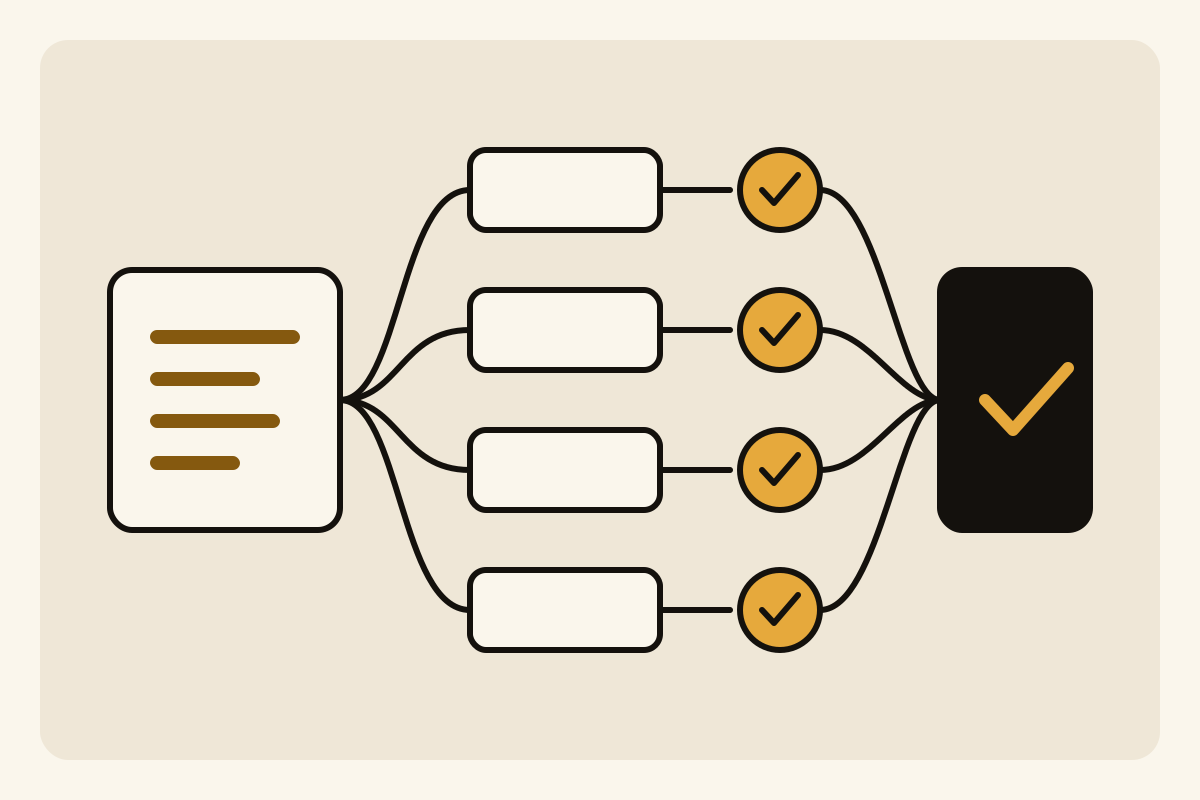
TechCrunch reports that Recursive itself acknowledges Flint needs more guidance than the large paid coding assistants, and suggests breaking big tasks into smaller steps. Flint's model card on Hugging Face goes further. It says the model “can still produce incorrect or harmful content, faulty code, or inappropriate tool calls,” and tells users to “test generated code and review consequential changes before applying them.” Read together, that is an operating manual for working with any AI that writes code, and it is made of human skills.
- Decompose: turn a vague ambition into steps small enough to hand over
- Specify: say exactly what “done” looks like, so the result can be judged
- Verify: test what comes back, and review anything that matters before it ships
- Decide: choose which problem is worth the effort in the first place, which no model does for you
When the tool is free, the tool stops being the advantage
Apache 2.0 means a teenager and a $4.65 billion lab can download the same weights. That does not make them equals, because the lab still has the compute, the data and the team. But the gap in access to the tool has closed to roughly nothing, and what is left is how well each side directs it. That difference is learnable, and it is learned the way any craft is: by doing real work and having someone honest tell you what is wrong with the result.
“When the tool is free, the only thing left to compete on is how well you direct it. Nobody can download that. You practise it on real work, with someone who will tell you the truth about the result.”
Muhammad Mostafizur Rahman, Founder, PsyntaxLabs Academy
Why we teach it by hand first
In our programme, the Build phase is one user, one painful job and one complete journey, built by hand first and then accelerated with AI. The order is deliberate. You cannot break a task into sensible steps, or tell whether the result is right, for something you could not have built yourself. A student who has written the first version by hand reviews AI output with real judgement. A student who has only ever prompted reviews it with hope.
Three questions to ask any programme that teaches AI coding
- Do students write a first version themselves before AI takes over, or do they start by prompting?
- Who reviews each student's actual work, and how many students is that person responsible for at once?
- What does a student have at the end that is real: a product with a user, or a folder of exercises?
The tools will keep changing, and a free model today will be replaced by a better one soon. The answers to those three questions will not go out of date, because they test whether a child is learning to direct the tool or only to operate it.
That is also why our cohorts are capped at six across the 24-week programme for ages 11 to 19: someone has to look at each student's actual work and say what is wrong with it. If you want your child practising that on a real product rather than a demo, book a free consultation and we will show you what it looks like week by week.
Frequently asked questions
Yes, because directing and checking AI output requires understanding it. Even Recursive's free Flint coding model tells users to test generated code and review consequential changes before applying them. At PsyntaxLabs Academy, students build their first version by hand before using AI to accelerate it, across a 24-week programme for ages 11 to 19.
Breaking a big goal into small steps, saying precisely what done looks like, testing what comes back, and choosing a problem worth solving. Recursive's own guidance for Flint asks users to break large tasks into smaller steps and to review generated code. The 24-week programme at PsyntaxLabs Academy practises those skills on a real product, in cohorts capped at six.